Manufacturer and supplier review
Thin wall stainless steel tubing for lightweight precision components
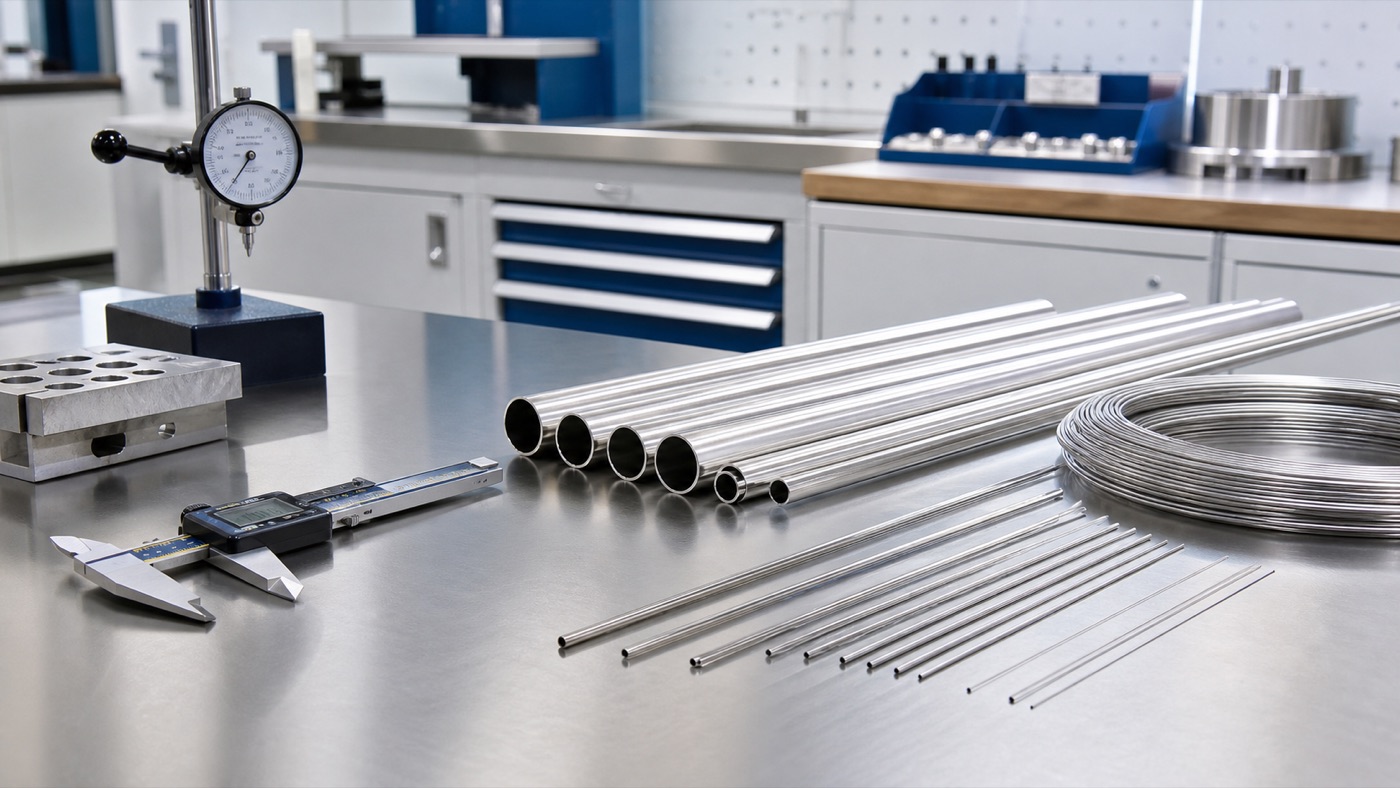
Thin wall stainless steel tubing requires more than a nominal wall value. Buyers should define OD, ID, wall thickness tolerance, material condition, cut length, end-face requirement, straightness, surface condition, handling, and inspection because thin tubes are more sensitive to deformation during processing and shipping.
Key points for buyers and engineers
- Confirm whether wall thickness is calculated from OD and ID or independently controlled and inspected.
- Review ovality, concentricity, end deformation and burr risk when the wall is small relative to the diameter.
- Define how tubes should be supported, bundled or individually protected during packing.
- Use prototype or sample review before repeat production when the tube must be formed, welded, pressed, or assembled.
Technical facts to compare
What makes a thin wall tube quote-ready
State which dimensions are functionally critical and avoid applying an unnecessarily tight tolerance to every feature. The supplier should know whether the tube is a flow path, sleeve, structural element, probe, sensor tube or unfinished raw material.
- Critical OD or ID fit
- Wall and ovality requirement
- Cutting and end-face standard
- Further forming or assembly process
- Inspection and sample approval route
Cutting and handling thin wall tubing
Cutting method should be selected from material, diameter, wall, length, burr limit and thermal sensitivity. The finished tube should be checked for end collapse, internal burrs, blocked bore, discoloration and scratches before packing.
Useful next pages
FAQ
What does thin wall mean for stainless steel tubing?
Thin wall describes a tube whose wall is small relative to its diameter or application requirement. The exact wall thickness and tolerance must still be stated in the drawing or RFQ.
Can thin wall tubing be laser cut?
It can be reviewed for laser cutting, but heat effect, end deformation, burrs, discoloration, bore blockage and length tolerance must be evaluated for the specific size.
Why is packing important for thin wall tubes?
Thin wall tubes can bend, dent, scratch or mix during transport. Packing should support the tube and protect critical surfaces and ends.
RFQ information to prepare
For supplier review, prepare material grade, OD, ID, wall thickness, cut length, tolerance, quantity, surface finish, application, drawing files, inspection requirements, packing notes, and destination country.
Supplier quote support is available through Dongguan Yefa Metal Materials Co., Ltd, while this page remains focused on capillary tubing technical data and sourcing decisions.