Material sourcing guide
Stainless steel capillary tube raw material selection affects corrosion resistance, tube forming, surface condition, dimensional control, cutting quality, cleaning, documentation, and long-term OEM supply stability.
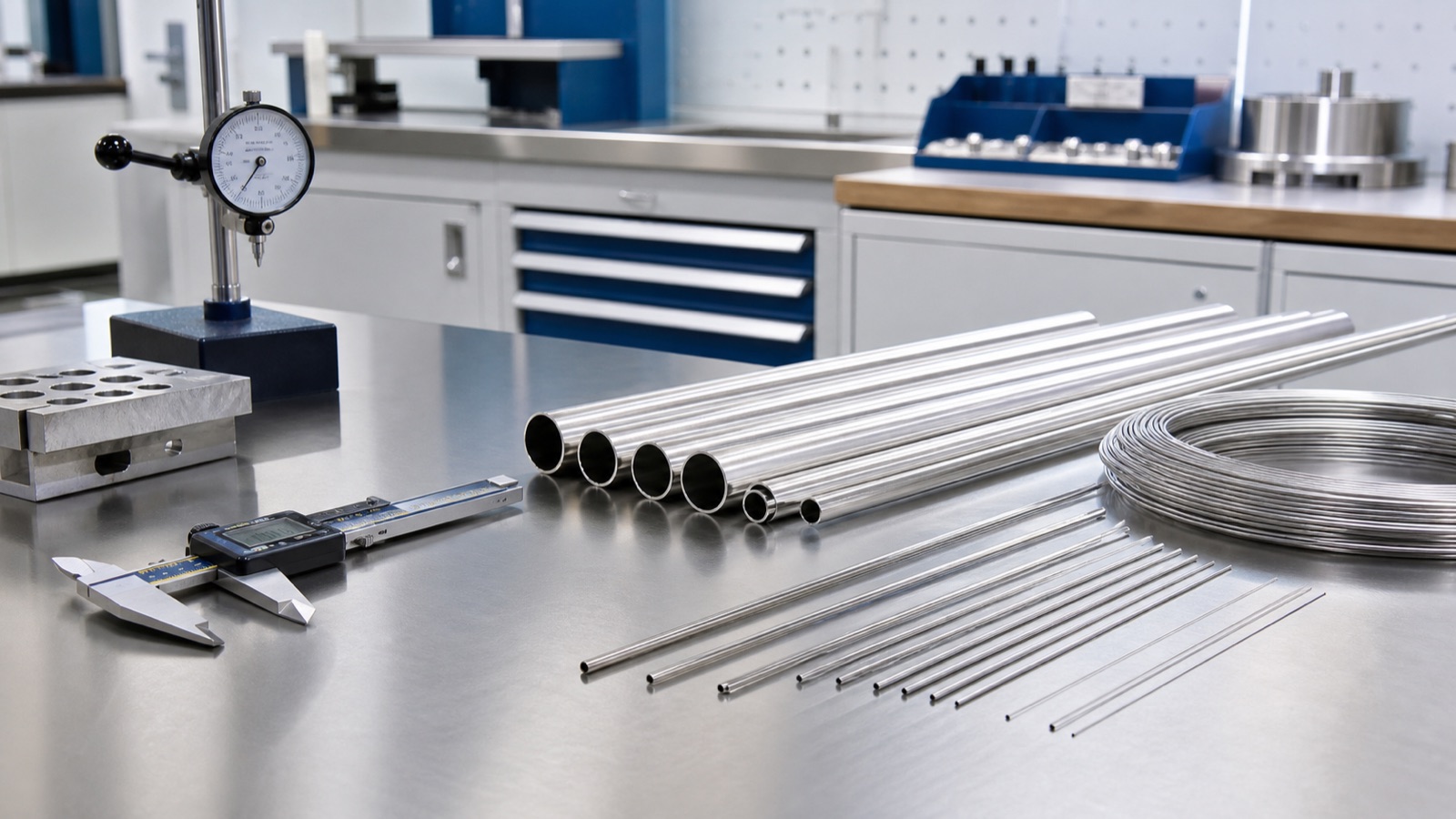
304 Stainless Steel
304 stainless steel capillary tubing is often used for general precision components, instruments, sleeves, fixtures, and fluid transfer requirements.
316L Stainless Steel
316L stainless steel capillary tubing is frequently selected for precision components, analytical instruments, corrosion-sensitive environments, and projects requiring stronger material resistance.
OEM Raw Material Review
Buyers should confirm material grade, OD, ID, wall thickness, tolerance, surface finish, tube form, documentation, packing, and repeat order needs.
How to choose stainless steel capillary tube raw material.
For capillary tubing, raw material is not only a grade label. The buyer should also review tube manufacturing route, dimensional consistency, surface condition, annealing condition, straightness, cleanliness, cut length behavior, and whether the supplier can support repeat production lots.
Raw material questions for technical buyers.
Before ordering, confirm whether the tube will be used for fluid transfer, precision instrument components, chromatography, sensors, probes, precision inserts, or mechanical assemblies. Different applications may require different stainless grades, end finish, cleaning, packing, and documentation levels.