Manufacturer and supplier review
316L capillary tubing for corrosion-sensitive precision applications
Dongguan Yefa reviews 316L stainless steel capillary tube requirements for overseas buyers that need small diameters, controlled bore size, thin walls, custom cut lengths, clean end faces, and project-specific inspection. Send the required OD, ID, wall thickness, length, tolerance, quantity, surface condition, and application for an RFQ review.
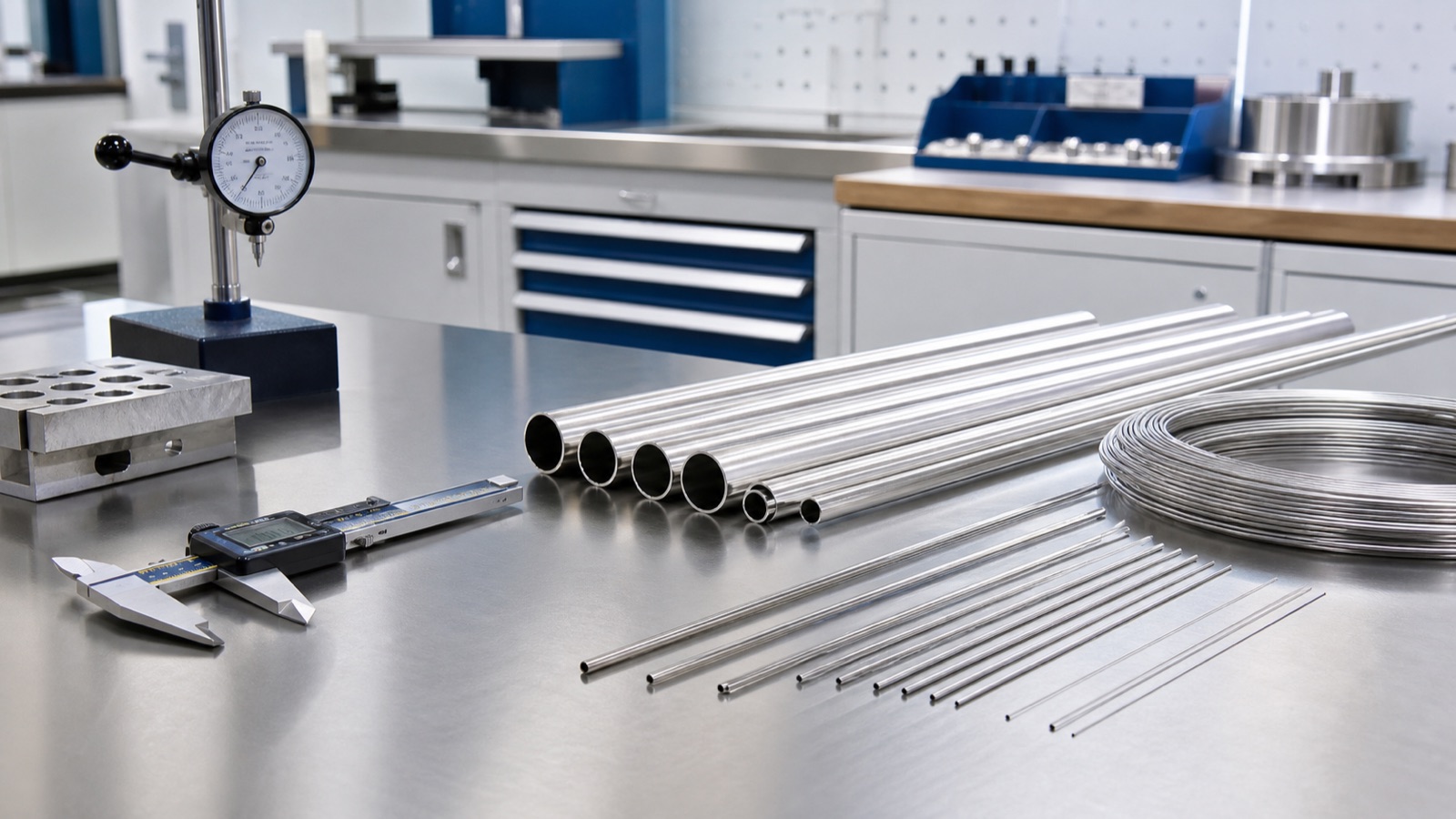
Key points for buyers and engineers
- Use 316L when chloride exposure, cleaning chemicals, analytical fluids, or general corrosion risk is more demanding than a typical 304 application.
- Specify OD and ID together when bore clearance, flow, probe fit, or assembly fit is critical.
- Define cut length, length tolerance, deburring, end-face condition, straightness, and packing for finished tube components.
- Request material documentation and inspection records in the RFQ when traceability is required.
Technical facts to compare
What buyers should specify before quotation
A usable 316L capillary tube inquiry includes more than a nominal diameter. OD controls external fit, ID controls the internal passage, and wall thickness affects strength and processing risk. The drawing or size table should also identify which dimensions are critical and how they will be measured.
- Material grade and condition
- OD, ID and wall thickness
- Length and length tolerance
- End condition, burr limit and surface finish
- Quantity, annual demand, packing and destination
Common industrial sourcing applications
316L capillary tubing is commonly reviewed for analytical instruments, chromatography systems, sensors, laboratory equipment, chemical fluid paths, probes, precision sleeves and small mechanical assemblies. Application details help determine whether the buyer should prioritize corrosion resistance, bore cleanliness, dimensional fit, or end-face quality.
Useful next pages
FAQ
Why choose 316L instead of 304 capillary tubing?
316L contains molybdenum and is generally selected when improved corrosion resistance is required. The final grade should be chosen from the actual fluid, cleaning, temperature, environment, and documentation requirements.
Can 316L capillary tubes be supplied in custom sizes?
Custom size review is possible when the buyer provides OD, ID, wall thickness, length, tolerance, quantity, application, and required delivery condition.
What documents should be requested with 316L tubing?
State whether the project needs a material certificate, dimensional inspection report, lot identification, surface or cleanliness requirement, and any customer-specific document format.
RFQ information to prepare
For supplier review, prepare material grade, OD, ID, wall thickness, cut length, tolerance, quantity, surface finish, application, drawing files, inspection requirements, packing notes, and destination country.
Supplier quote support is available through Dongguan Yefa Metal Materials Co., Ltd, while this page remains focused on capillary tubing technical data and sourcing decisions.